The Agentic Transition:
Closing the Cognitive Gap
Having architected a robust "Marketplace" of standardized UI components to unify GCP policy management, the next logical question emerged: Who, or what, is the primary user of this system?
I used reCAPTCHA as the initial staging ground to reconstruct the service using this componentized framework. This foundation unlocked a profoundly more ambitious proposition: Now that I possessed a comprehensive library of UI primitives, why should the designer (or the end-user) manually assemble them? What if the user could summon precisely what they needed, at the exact moment of need, driven purely by their intent?
The Challenge: Executional Paralysis
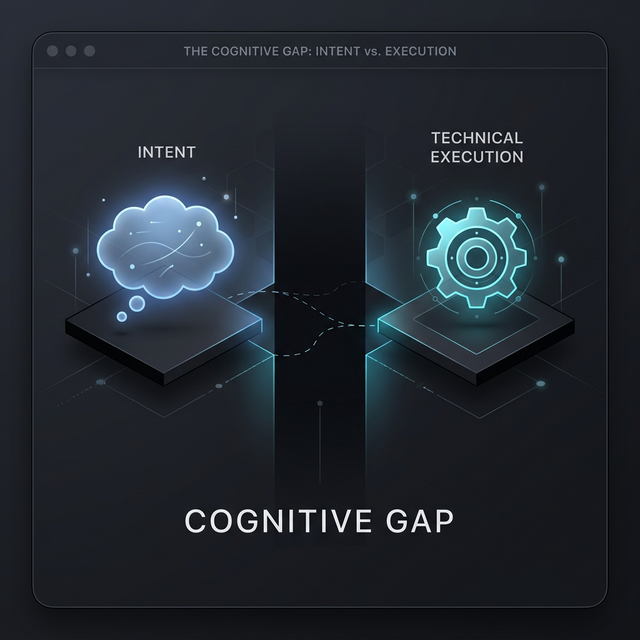
Even with impeccably structured UI, enterprise security practitioners frequently stumble translating their strategic intent into operational reality. They know their ultimate goal (for instance, "block scraping bots from the login page"), but falter when navigating the sequence of technical tasks required to implement that protection.
This "cognitive gap" directly resulted in configuration paralysis, elevated bounce rates, and critical drop-offs within the reCAPTCHA funnel. The objective of the reCAPTCHA Agentic Console was to definitively close this gap, transforming a daunting configuration process into a guided, intent-focused dialogue.
Trust Dynamics: The 'Auto Run' Mechanism
A pivotal innovation in restoring agency is the 'Auto Run' configuration. When engaged, the agent autonomously commits the synthesized policy. When disengaged, the agent halts, projecting the assembled UI for the practitioner's explicit authorization.
This toggle is far more than a feature; it's a critical assurance mechanism. It grants the user unconditional oversight, reinforcing the paradigm of the agent as a trusted proxy rather than a black-box autonomous actor.
The Result: Actionable Interfaces
The result is a console that always nudges you toward a solution. By blending intelligent automation with human control, I've turned configuration from a complex hurdle into a streamlined conversation.
You get unprecedented speed and a validated security posture, without giving up an ounce of control.