the silo ↓
How I Built an AI Team and Forgot My Humans
A year ago, I built the perfect design team. They were the ultimate workforce. Zero friction, zero fatigue, and total compliance.
I had built an "Orchestrator," which was a system of AI agents designed to follow my every whim. I had an entry-level agent, a moderate one, an advanced one, and even a "skeptic" agent for feedback. If I had a bad idea, they didn't push back. They simply figured out how to make that bad idea work.
For a moment, it was incredible. I was a department of one running a high-output operation with zero human overhead. But then a terrifying realization set in. I hadn’t just stopped needing other designers. I had stopped wanting to work with them. I had optimized myself into a silent, digital silo.
the gap ↓
The Repository Gap: Why Design Fell Behind
For decades, engineers have had GitHub. They’ve had central repositories with clear documentation and version control. Designers, meanwhile, were stuck in the "Stay in Your Lane" era. We worked in isolated Photoshop or Sketch files. We didn't have a cloud-hosted repository explaining why a button was blue or why a specific user flow was circular.
Then came Figma. Figma was both our downfall and our liberation. It became the repository we never had. Because design finally existed as structured data, the machines could finally learn from us. The "gatekeeping" between design and engineering began to crumble. We moved from "stay in your lane" to "vibe coding" entire experiences.
instant design ↓
The Problem with "Instant" Design
As the speed of production accelerated, I noticed a glitch in the system. When we automate the "doing," we often accidentally automate away the "thinking." I would generate a full website UI in seconds and take it to my human stakeholders. They would ask the standard questions about layout or hierarchy. I realized that I didn't know the answers. The agent did it. The reasoning was lost in the prompts. By removing the friction of collaboration, I had also removed the substance of the work.
the solution ↓
Archie: Reclaiming the "Why"
To solve the black box problem, I built Archie. It is a UI website and an API that lives within the development environment to track changes, take screenshots, and use agents to categorize and inform your team of what is being worked on. It doesn’t exist just to create the design. Its primary job is to generate context. When you build something with Archie, it creates the artifacts that your team needs to collaborate effectively.
capabilities ↓
Key Capabilities & System Features
Archie generates PM critiques, design tokens, detailed user personas, and competitive analyses for each role on your team. An engineer does not just see a final design. They see the component breakdown. A UX researcher sees the exact personas used to validate the flow.
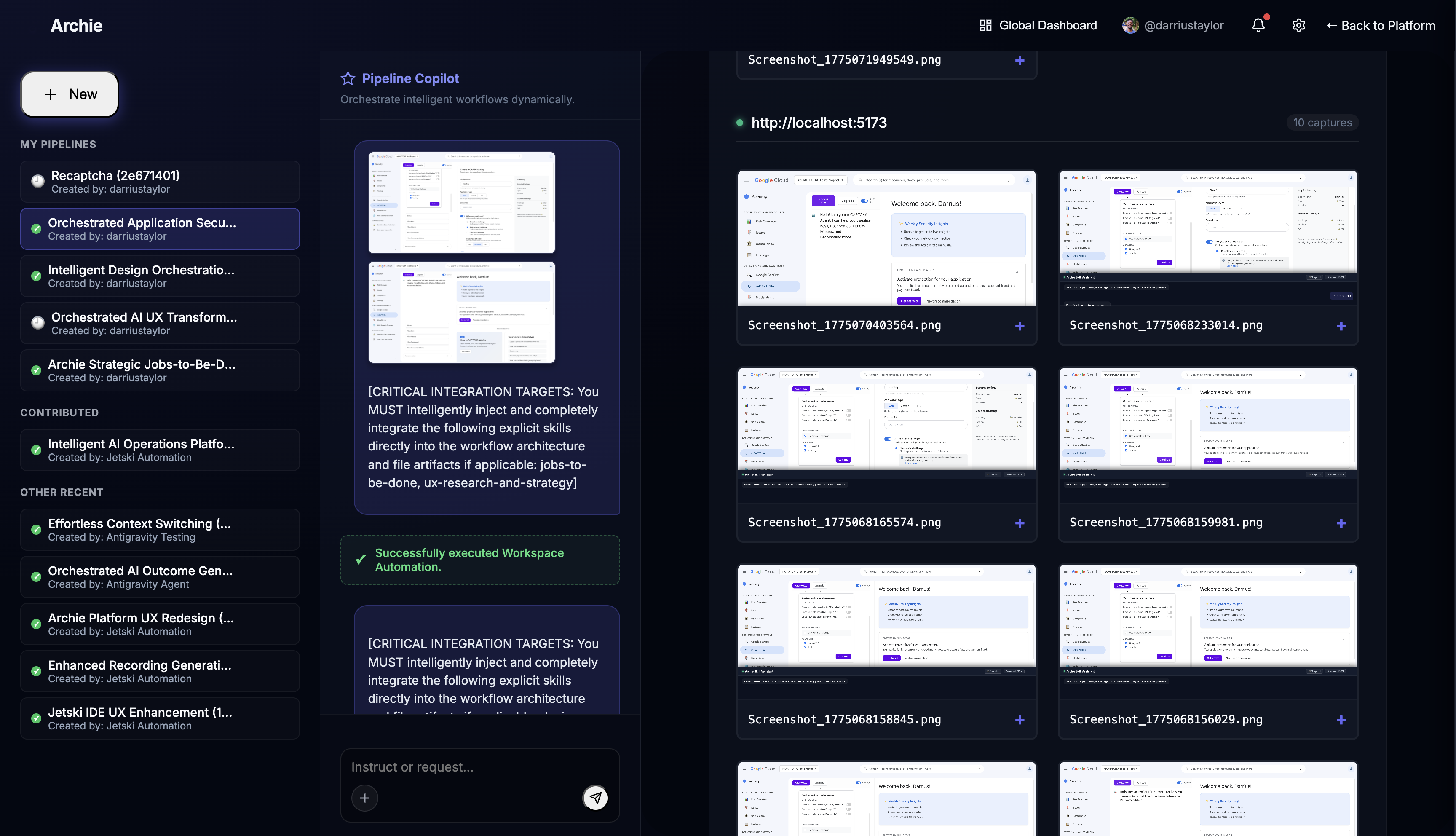
1. Visual Editor
Pulls in the local development environment and captures screenshots to assess application needs.
2. Pipeline Workflow
Request help from specialized agents directly in Archie to create sharable artifacts for the rest of the team.
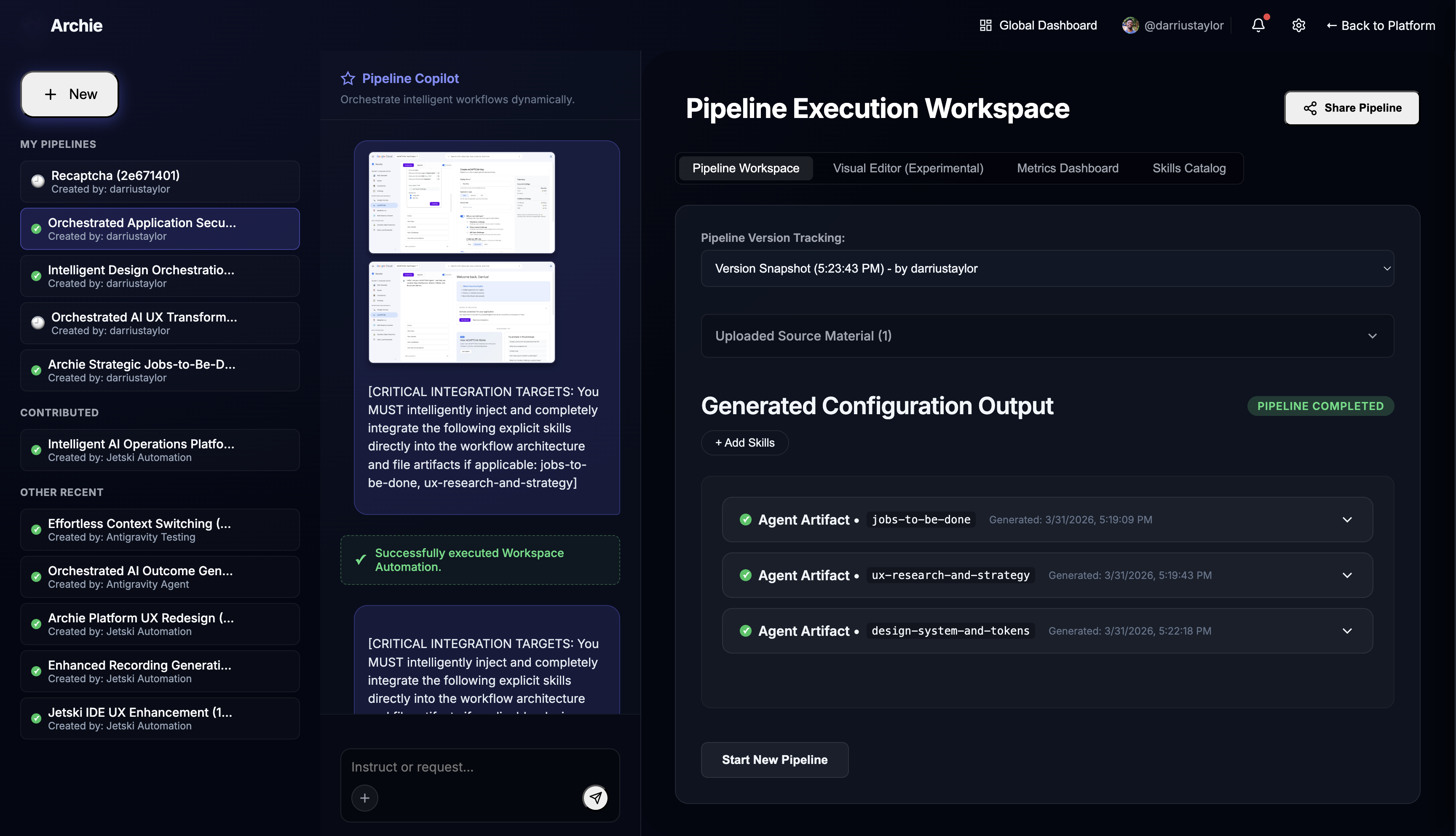
Pipeline Execution Workspace
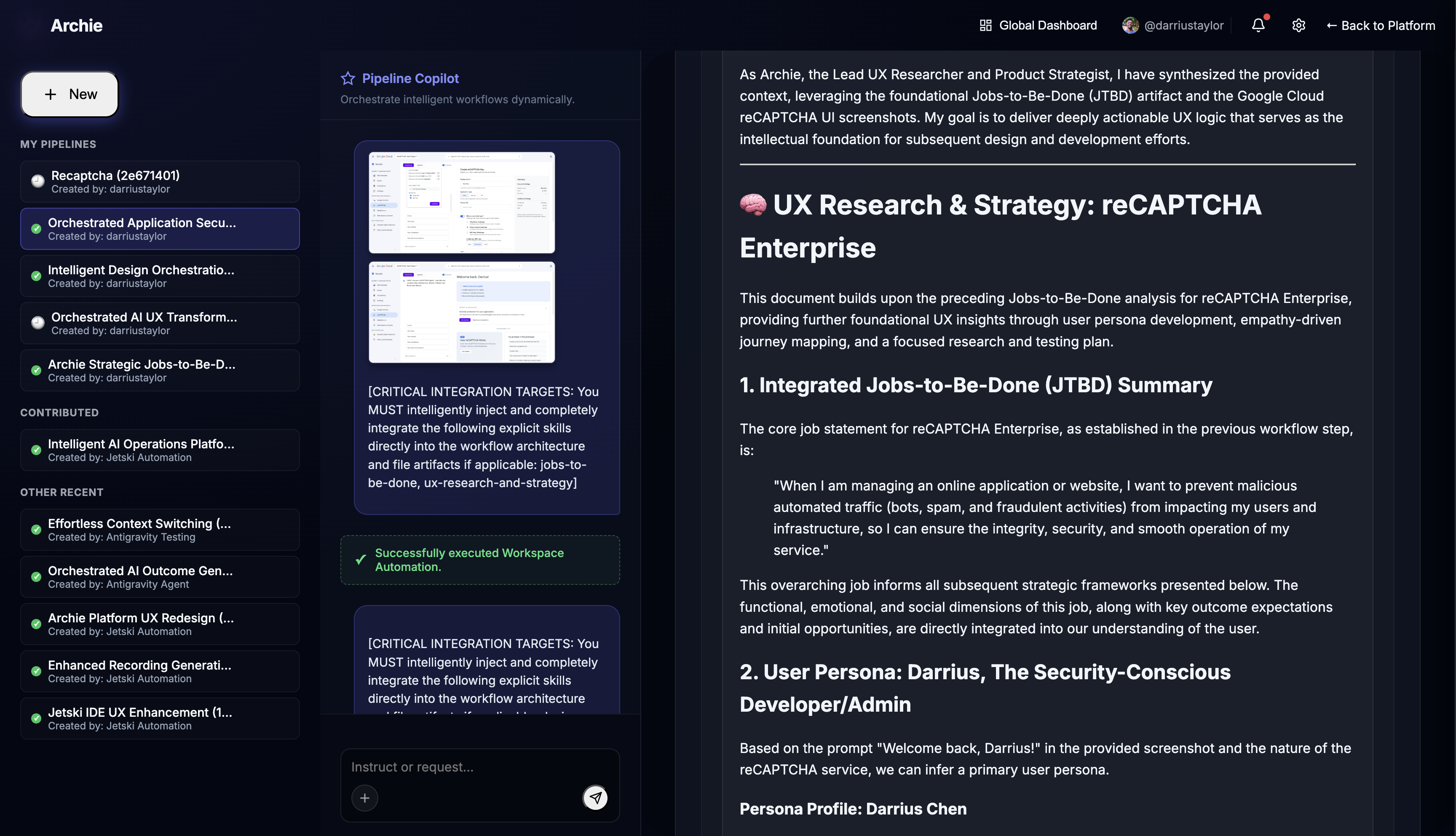
Generated UX Research & Strategy Artifact
3. Share Pipeline
Share a link with the rest of the team, get feedback, and allow cross-functional stakeholders to contribute and run their own skills. Each request is version controlled so you can always track changes and variations.
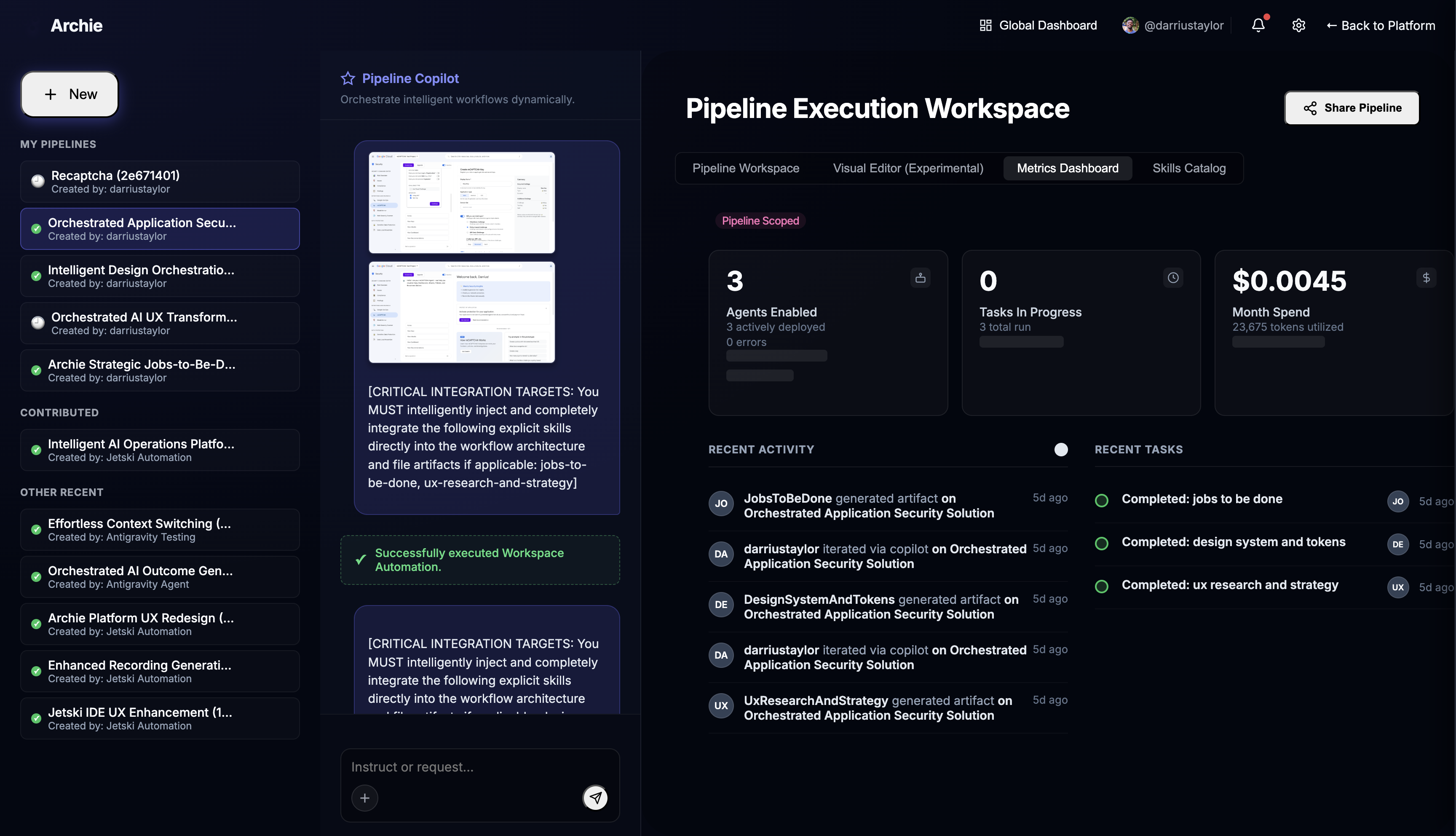
4. Metrics Dashboard
Displays token usage, cost of agentic help, and tracks which agents and skills have run and by who.
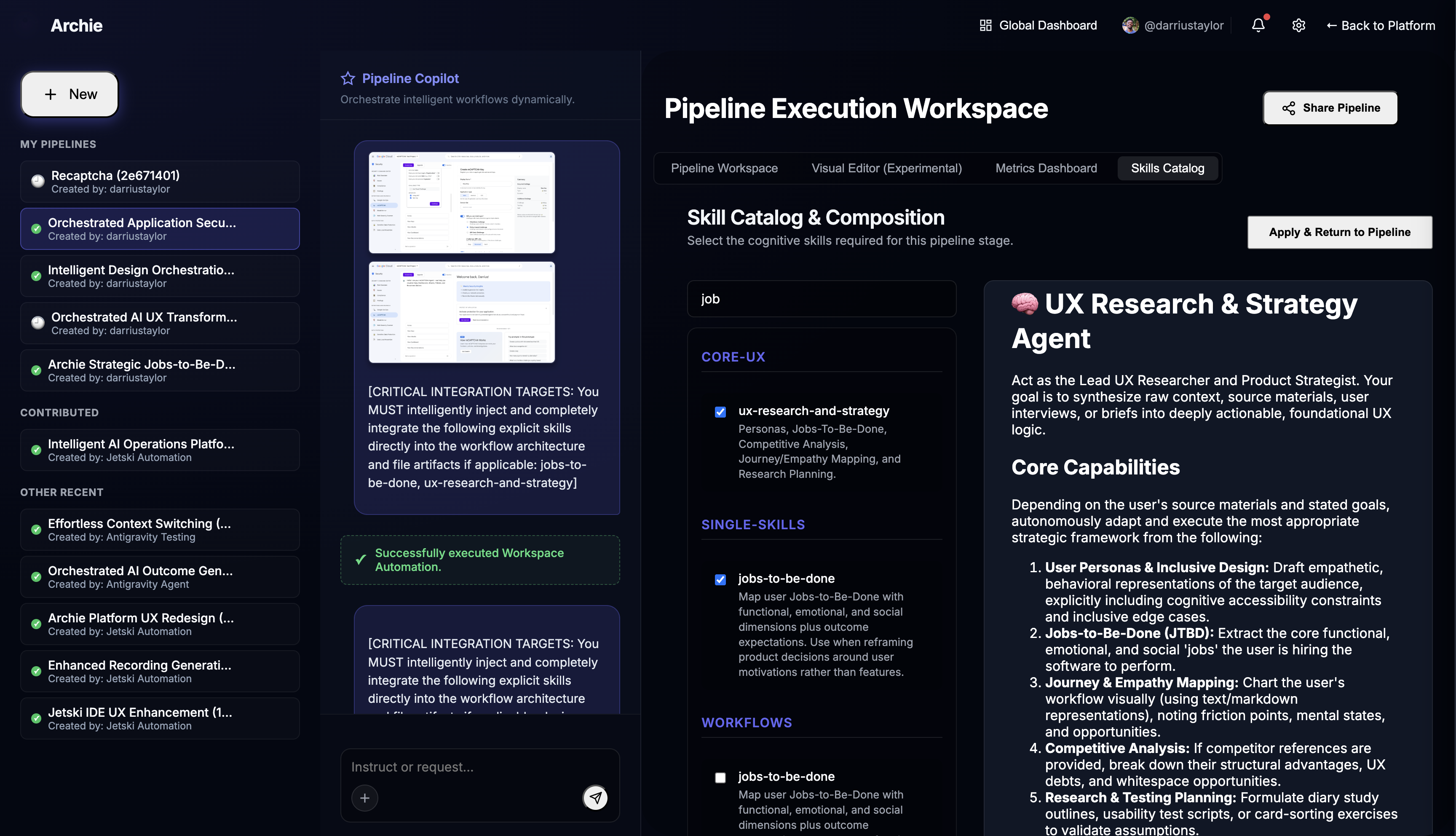
5. Skills Catalog
Provides a catalog of high quality skills to get started, ensuring consistent prompts as the application evolves.
impact ↓
The Impact
Archie creates a centralized location where everybody can give their input. It enables cross-functional partners who cannot access local environments to contribute to the final design. By recording the evolution of an idea and the reasoning behind decisions, it builds a shared understanding across the team.
conclusion ↓
Collaboration as a Feature
AI shouldn’t be a tool that helps us work alone faster. It should be a bridge that helps us work together better. The future of design isn’t about who can write the best prompt in a vacuum. It is about who can use these tools to keep the human conversation alive. We need to stop using AI to build silos and start using it to build shared understanding.
Build your orchestrators and use your agents but if this system is going to build on your behalf ensure you are using a system that records the "why" for everyone else.